

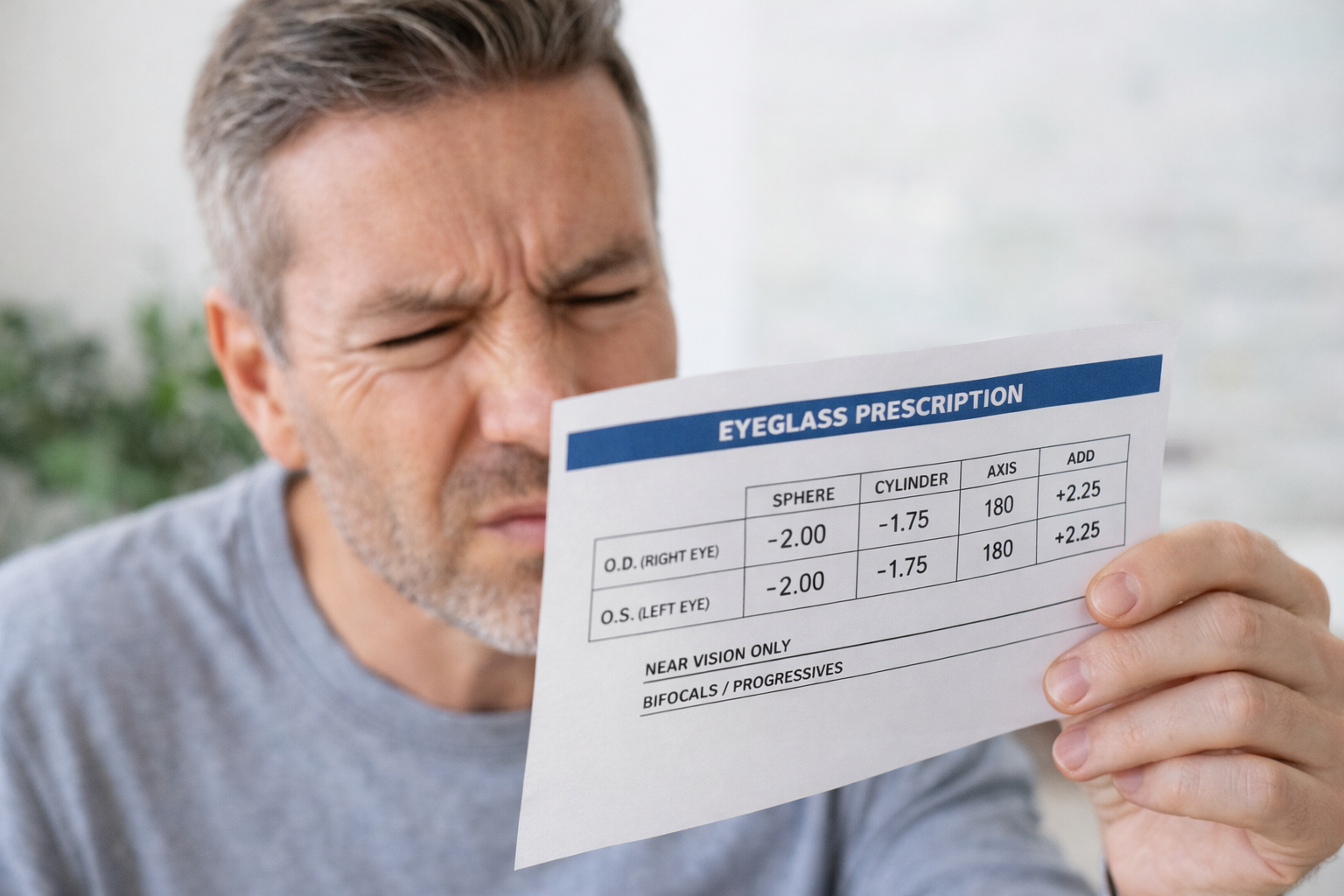
“An eye prescription explains how lenses should be designed to correct your vision. The numbers describe how light focuses in each eye and typically include measurements like SPH (sphere), CYL (cylinder), AXIS, ADD, and PD. These values help optometrists, opticians, and lens manufacturers create eyeglasses or contact lenses that allow you to see clearly.”
After an eye exam, many patients review their prescription and feel a little confused.
You might see abbreviations like SPH, CYL, AXIS, ADD, or PD, along with a series of numbers that don’t immediately make sense.
That’s completely normal.
An eye prescription contains technical measurements that describe how light focuses inside your eyes. Once you understand what those numbers represent, it becomes much easier to understand your vision and the lenses that will help you see clearly.
As an optometrist in Edmonton, this is one of the most common questions patients ask after their comprehensive eye exam.
Let’s walk through what each part of a prescription means and how it translates into the glasses or contact lenses you wear every day.
Example of an Eyeglass Prescription
A typical eyeglass prescription might look like this:
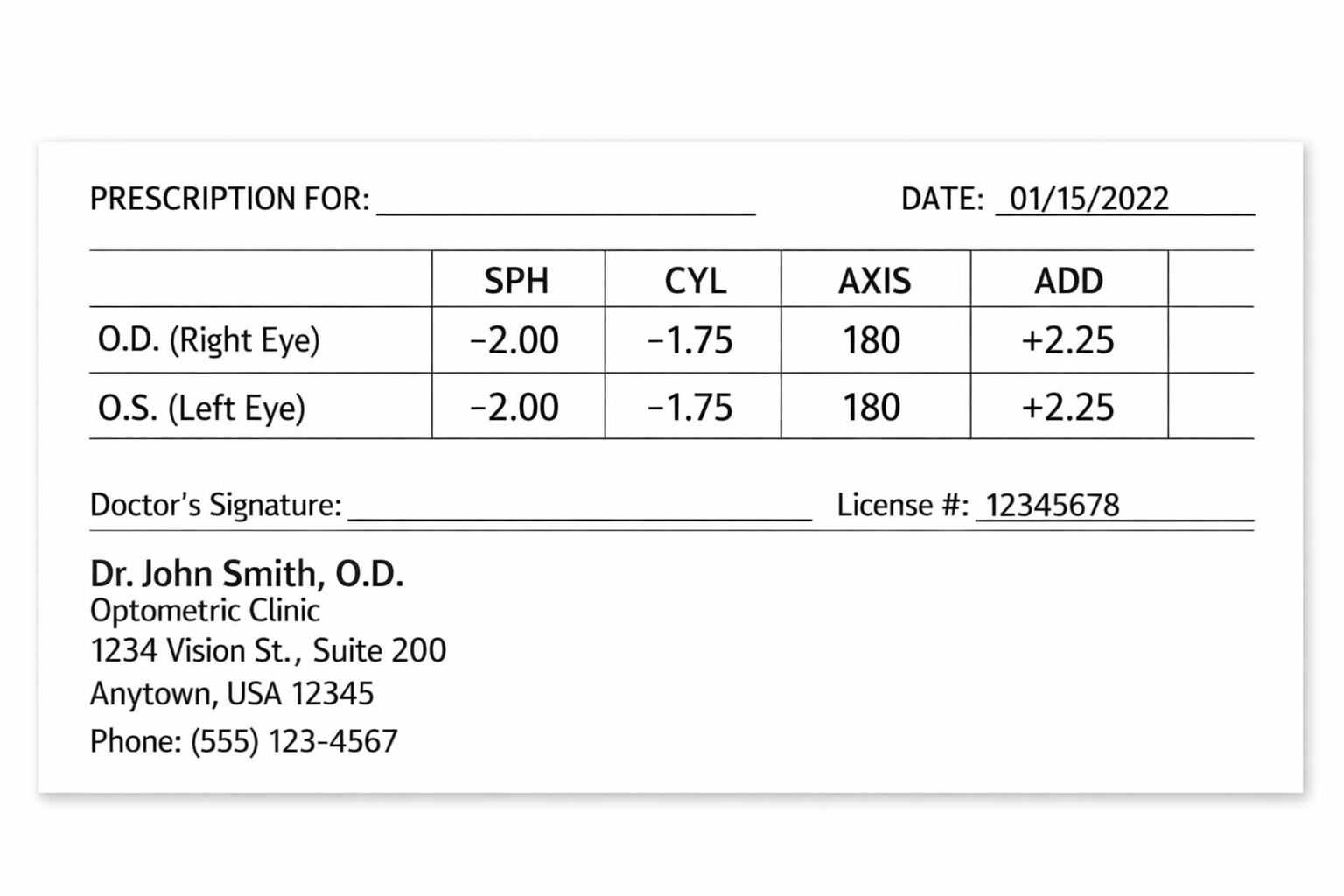
It may look complicated at first, but each number simply describes how your eye focuses light.
Let’s break down what each part means.
What SPH Means on Your Prescription
SPH (Sphere) represents the main strength of your prescription.
This number corrects either nearsightedness (myopia) or farsightedness (hyperopia).
Negative numbers (for example, -2.00) indicate nearsightedness. This means distant objects appear blurry, while close objects are clearer.
Positive numbers (for example, +1.50) indicate farsightedness. In this case, near objects are harder to focus on.
The further this number moves away from zero, the stronger the correction required.
What CYL Means
CYL (Cylinder) measures the amount of astigmatism present in the eye.
Astigmatism occurs when the front surface of the eye (the cornea) is slightly oval instead of perfectly round.
Because of this shape, light entering the eye does not focus evenly, leading to blurry or distorted vision.
Not everyone has astigmatism, so some prescriptions may leave the CYL column blank.
When present, this number works with the axis to correct the distortion.
What Axis Means
The Axis describes the orientation of astigmatism correction.
This number ranges from 0 to 180 degrees and tells the lens manufacturer how to align the cylinder correction.
Think of it like the direction a lens needs to be positioned in order to correct the uneven curvature of the eye.
Without the correct axis alignment, the astigmatism correction would not work properly.
What ADD Means
ADD (Addition) represents extra magnifying power for near vision.
This number appears in prescriptions for people who need help seeing objects up close, such as reading material or phone screens.
The need for this extra focusing power is caused by presbyopia, a normal age-related change that usually begins in the early 40s.
Many patients choose progressive lenses or multifocal contact lenses to correct both distance and near vision.
What PD Means
PD (Pupillary Distance) measures the distance between the centres of your pupils.
This measurement ensures that eyeglass lenses are positioned precisely in front of your eyes.
While PD is not technically part of the medical prescription itself, it is an important optical measurement when glasses are manufactured. It usually is not included on the original prescription, but instead measured by the optician.
Accurate lens positioning helps ensure the best clarity and comfort.
What Is Considered a Strong Eye Prescription?
Many patients wonder whether their prescription is considered mild, moderate, or strong.
While there isn’t a strict medical definition, prescriptions are often loosely categorized like this:
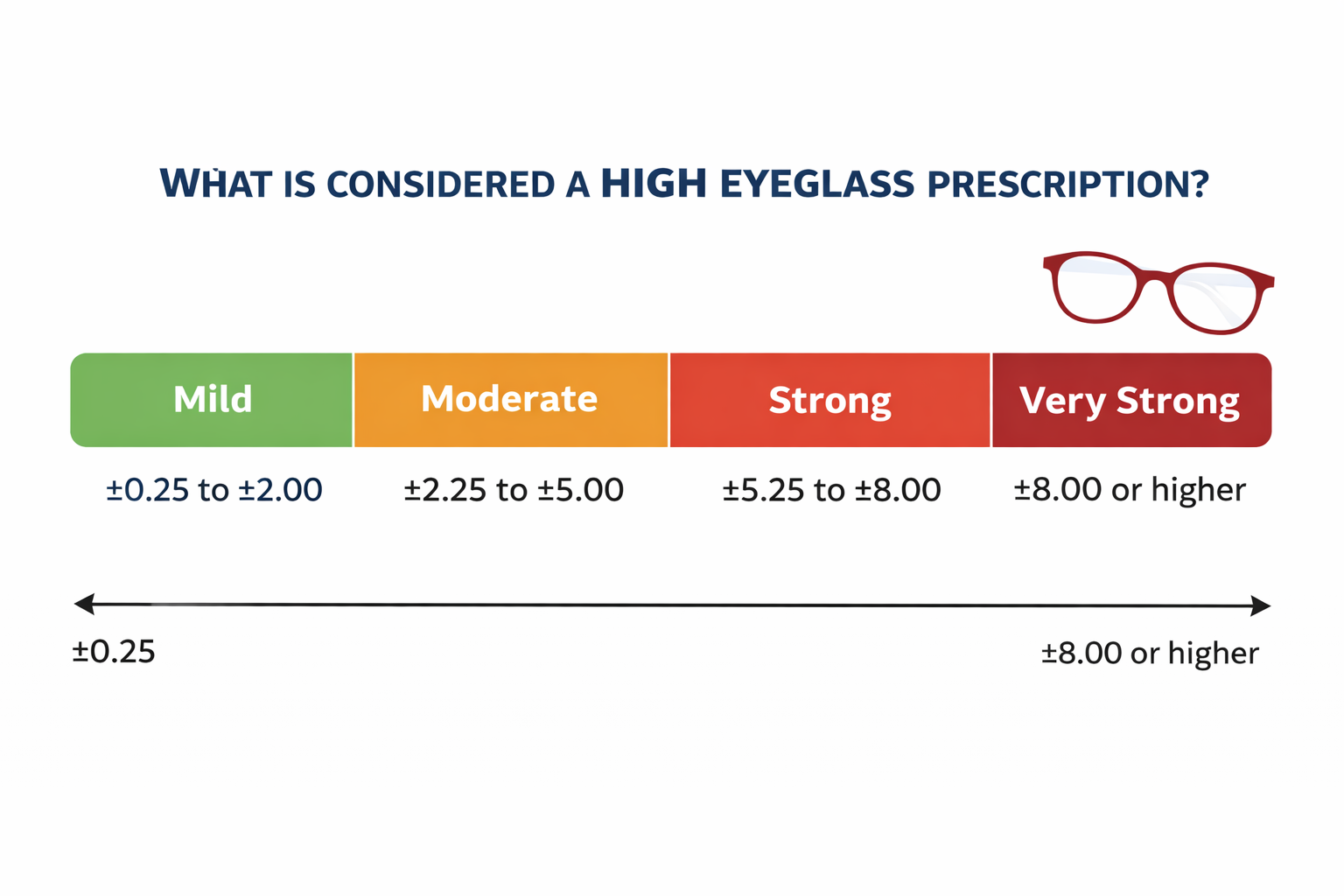
Patients with stronger prescriptions may notice:
• thicker eyeglass lenses
• more noticeable distortion at the edge of the glasses
• greater dependence on corrective lenses
Fortunately, modern lens technology has improved significantly. High-index lenses, digital lens designs, and properly fitted frames can dramatically improve clarity and comfort for stronger prescriptions.
An experienced optician can help select the best eyeglass lenses to optimize vision and reduce lens thickness.
Is -2.00 Eyesight Bad?
One of the most common questions people ask online is whether a -2.00 prescription is considered “bad eyesight.”
In reality, a -2.00 prescription is considered mild to moderate nearsightedness.
People with this prescription typically:
• see clearly up close
• experience blurry distance vision
• benefit significantly from glasses or contact lenses
Many patients with prescriptions around -2.00 choose to wear contact lenses for convenience during sports, driving, or everyday activities.
While this prescription level is very common, regular eye exams in Edmonton are still important to monitor changes over time and ensure the prescription remains accurate.
Why an Optician Is Important When Filling Your Prescription
Understanding your prescription is one thing — translating it into the right pair of glasses is another.
When you’re selecting new eyewear, a trained optician is often the best person to help interpret your prescription and recommend the right lenses.
Opticians specialize in:
• selecting appropriate lens designs
• ensuring accurate optical measurements
• adjusting frames for proper fit
• optimizing lens performance for your lifestyle
Measurements such as pupillary distance, segment height, vertex distance, and pantoscopic tilt all influence how lenses perform once they are placed in a frame.
Because of this, working with an experienced optician can make a significant difference in the comfort and clarity of your new glasses.
Why Eye Prescriptions Change Over Time
It’s normal for prescriptions to change gradually throughout life.
Some of the most common reasons include:
• natural eye growth in children
• increased near work or screen time
• age-related focusing changes
• medical conditions affecting the eyes
Routine eye exams in Edmonton allow optometrists to monitor these changes and ensure your prescription remains accurate.
Eyeglass Prescription vs Contact Lens Prescription

A common misconception is that an eyeglass prescription can be used directly to order contact lenses.
In reality, contact lenses require additional measurements because they sit directly on the surface of the eye.
During a contact lens exam, your optometrist evaluates:
• corneal curvature
• lens diameter
• tear film quality
• lens material compatibility
These factors ensure that contact lenses provide clear vision while remaining comfortable and healthy for the eye.
How to Read a Contact Lens Prescription
A contact lens prescription looks different from an eyeglass prescription because contact lenses sit directly on the surface of the eye.
In addition to the vision correction numbers, a contact lens prescription usually includes:
BC (Base Curve)
This measures the curvature of the contact lens and ensures it fits properly on the eye.DIA (Diameter)
This describes the overall size of the contact lens.Brand or Lens Type
Unlike glasses, contact lens prescriptions specify a particular lens design and manufacturer.
Because of these additional measurements, an eyeglass prescription cannot be used directly to order contact lenses.
A contact lens exam ensures lenses fit properly, provide clear vision, and maintain healthy eyes.
What Your Prescription Doesn’t Show
An eye prescription tells us how to correct your vision, but it does not reveal everything about eye health.
During a routine eye exam, your optometrist also evaluates:
• retinal health
• optic nerve health
• eye pressure
• early signs of eye disease
Many eye diseases develop silently before symptoms appear, which is why regular exams remain essential even when vision seems stable.
What Parents Should Know About Children’s Prescriptions
Parents often notice that their child’s prescription increases during school years.
This is commonly due to myopia (nearsightedness) progression.
In recent years, childhood myopia has become significantly more common, partly due to increased screen time and reduced outdoor activity.
Modern myopia management treatments can help slow this progression and protect long-term eye health.
A children’s eye exam can determine whether these treatments may be appropriate.
The Bottom Line
An eye prescription may look complicated, but it simply describes how your eyes focus light.
Understanding the numbers can help you better understand your vision and make informed decisions about glasses or contact lenses.
At Helio Optometry, our goal is simple: help patients see well at work, in life, and in play.
If you have questions about your prescription or need help choosing new eyewear, scheduling an eye exam is the best place to start.

Disclaimer: The content provided in this blog post by Helio Optometry eye care clinic in West Edmonton is intended solely for informational purposes and does not replace professional medical advice, diagnosis, or treatment by a Licensed Optometrist. No doctor/patient relationship is established through the use of this blog. The information and resources presented are not meant to endorse or recommend any particular medical treatment or guarantee and outcome. Readers must consult with their own healthcare provider regarding their health concerns. Helio Optometry and its optometrists do not assume any liability for the information contained herein nor for any errors or omissions. Use of the blog's content is at the user's own risk, and users are encouraged to make informed decisions about their health care based on consultations with qualified professionals.



Somewhere around your 40s, your eyes stop doing three things at once, and most people just live with it. Here's the fix most places never actually get right, and why Stonewire builds every lens around how you really live, not just what your prescription says.