


So your optometrist just told you that you need progressive lenses. Maybe your first reaction was something like "shut the front door." Maybe it felt like a milestone you weren't quite ready for. You're not alone. We hear this in our exam room all the time at Helio Optometry.
Here's what we tell every single patient who gets that news: progressive lenses are not a sign that something has gone wrong with your eyes. They're actually a sign that your eyes are doing exactly what every human eye does. Somewhere between your late 30s and mid-40s, the natural lens inside your eye begins to lose flexibility. Reading a menu, a text message, or a price tag starts to require a little more effort. You might find yourself holding your phone further away, or squinting at the small print on a bottle.
The technical term is presbyopia. The practical meaning? It's time for progressive lenses. And honestly, once you understand what they are and how they work, we think you'll feel a lot better about the whole thing.
"Being able to see something and being able to see it comfortably are two very different things. As optometrists, our job is to make sure you can do both."
What progressive lenses actually are, and what they're not
Let's clear up the biggest misconception first. Most people assume progressive lenses work by dividing your lens into three separate zones: distance at the top, computer in the middle, reading at the bottom. Like three distinct windows stacked on top of each other. That's not how they work at all, and that mental model is actually what makes people nervous.
The word "progressive" tells you everything. The lens power changes gradually from the top of the lens to the bottom, with no visible line, no abrupt jump, and no seam in your vision. The top of the lens is calibrated for distance, like driving or watching TV. As your gaze moves naturally downward, the power gently increases, giving you clear and comfortable vision at every distance in between, including your computer screen, your phone, and the book in your hands.
There's no harsh line. There's no moment where your vision clicks from one zone to the next. It's a smooth, continuous gradient, which is exactly why progressive lenses look identical to regular lenses from the outside. Nobody will know you're wearing them unless you tell them.

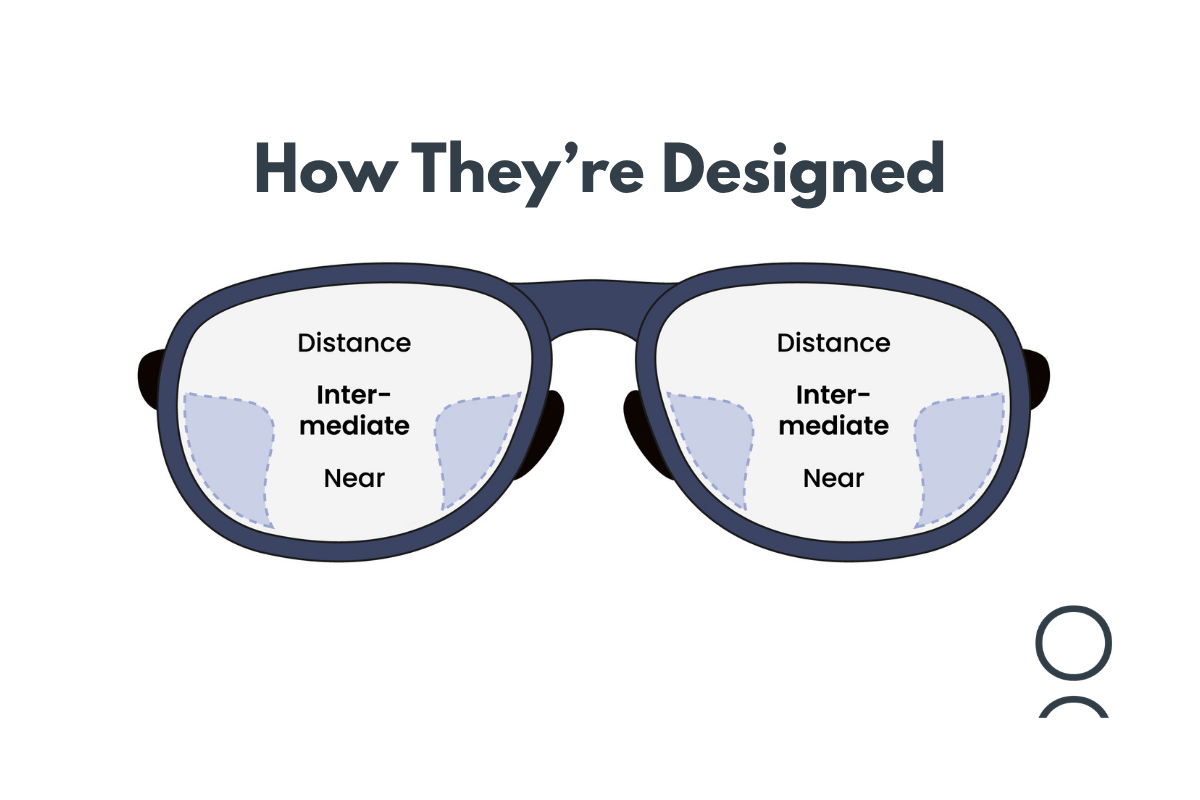
How do you actually use them day to day?
This is where most first-timers overthink it, and overthinking is exactly what slows down adaptation. Wearing progressive lenses is a remarkably natural experience. You don't need to train yourself to hold your head differently, tilt your chin, or consciously look through different parts of the lens. Your eyes already know how to do this.
When you want to see something in the distance, you look straight ahead, just like you always have. When you want to read, your gaze naturally drops, your head tips ever so slightly, and the lens does the rest. It's the same instinct you've always used. Now the lens is just working with you instead of against you.
The less you think about it, the better it goes. And that's genuinely good news.
How to adapt, and how quickly it happens
The first few days in progressive lenses can feel a little unusual. You might notice some mild distortion at the edges of your vision, a slight swimming sensation when you move your head quickly. This is completely normal, and it's temporary. Your brain is learning to use a new visual tool, and it's remarkably good at it.
The best thing you can do in those first days? Just wear them. Don't swap back and forth with your old glasses, because that resets the adaptation clock every time. Instead, put your progressives on in the morning and leave them on. Watch some TV. Scroll your phone. Go for a walk. These three activities, relaxed distance viewing, near viewing, and movement, are the perfect combination for training your visual system.
At Helio Optometry, the vast majority of our patients are fully comfortable in their progressives within two weeks. For many, it happens in a matter of days.
Why lens quality makes a real difference
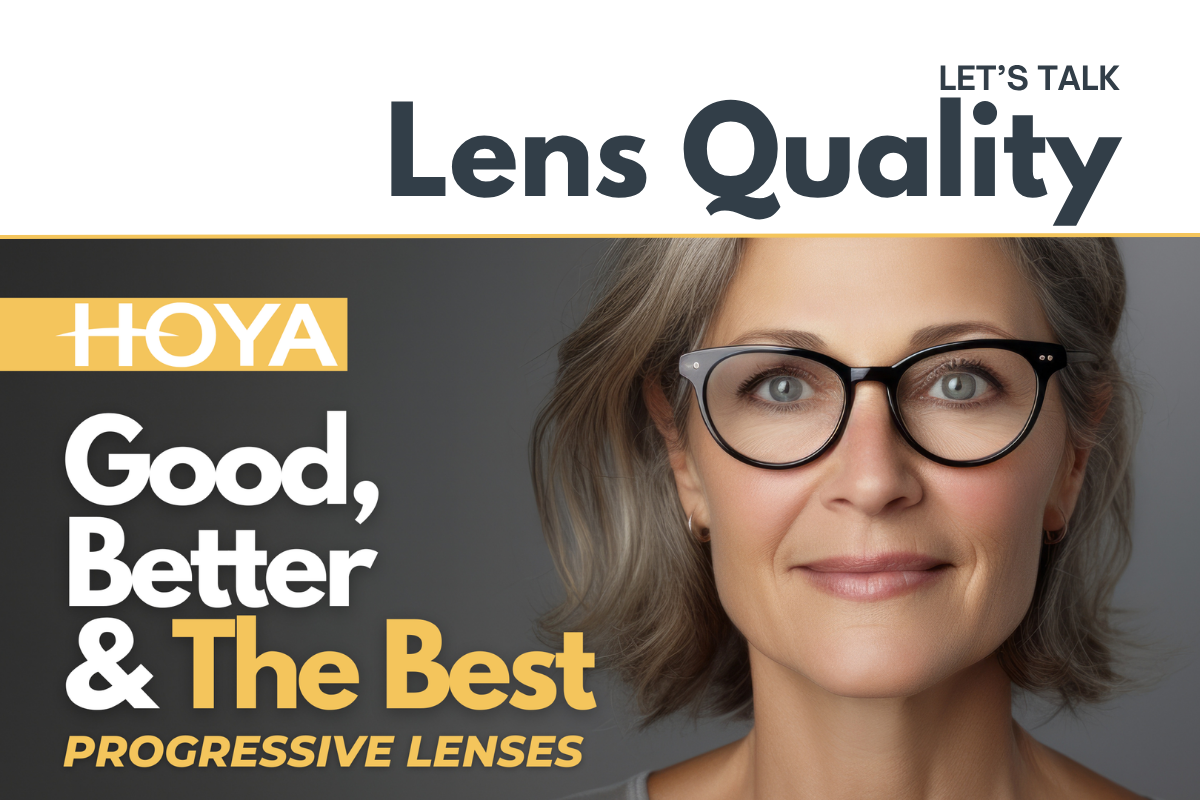
Not all progressive lenses are the same, and this matters more than most people realize. A premium digital progressive lens, like the ones we fit at Helio, is manufactured using free-form technology that customizes the lens to your exact prescription, your frame measurements, and the precise way you wear your glasses. The result is a wider and cleaner corridor of vision, smoother transitions from distance to near, and significantly less of that swim effect at the edges.
A lower-quality progressive lens, the kind you might find bundled into a two-for-one deal elsewhere, uses a more generic design. The corridor is narrower, the transitions are less refined, and adaptation takes longer. Many patients who tell us they couldn't get used to their first progressives were actually wearing lenses that simply weren't precise enough for their needs. It wasn't them. It was the lens.
This is one of the most important things we do at Helio: match the right lens to the right patient, at the right prescription, measured in the right frame. Which brings us to fitting, and that's a whole story on its own.
The fitting process: why it matters more than you think
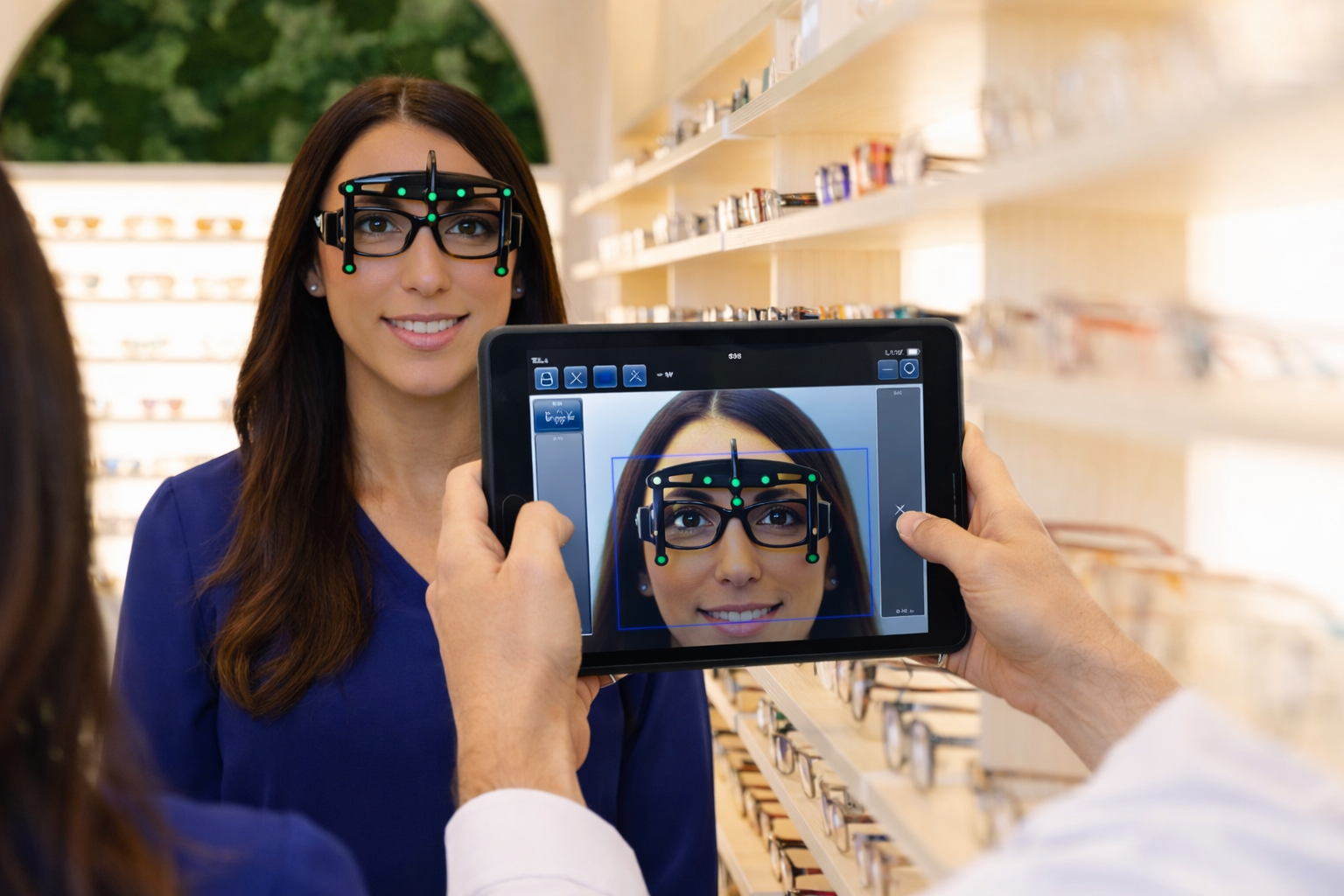
A basic PD measurement, the distance between your pupils, is not enough to fit a progressive lens properly. At Helio Optometry, our licensed opticians use digital measurement technology to capture your monocular PD, your seg height (the exact vertical position of your optical centres), your pantoscopic tilt, and your frame's face form angle. We pre-adjust your frame before taking any measurements and choose frames specifically suited to your prescription. All of these variables feed directly into how your lenses are manufactured.
When every measurement is right and every variable is accounted for, progressive lenses feel effortless. When they're not, even when the prescription itself is correct, things don't work the way they should. Precision fitting is what separates a progressive lens you forget you're wearing from one that ends up in a drawer.
Ready to find out if progressive lenses are right for you?
If you're in your late 30s or 40s and finding that near vision is becoming more of an effort, or if you've already been told you need progressives and want to talk through your options with a team that takes the time to get it right, we'd love to see you at Helio Optometry.
We serve patients across West Edmonton including Crestwood, Parkview, Sherwood, Jasper Gates, Laurier Heights, and Glenora. Book your comprehensive eye exam online or give us a call. We're here to make sure your vision is as clear and comfortable as it can possibly be.

Disclaimer: The content provided in this blog post by Helio Optometry eye care clinic in West Edmonton is intended solely for informational purposes and does not replace professional medical advice, diagnosis, or treatment by a Licensed Optometrist. No doctor/patient relationship is established through the use of this blog. The information and resources presented are not meant to endorse or recommend any particular medical treatment or guarantee and outcome. Readers must consult with their own healthcare provider regarding their health concerns. Helio Optometry and its optometrists do not assume any liability for the information contained herein nor for any errors or omissions. Use of the blog's content is at the user's own risk, and users are encouraged to make informed decisions about their health care based on consultations with qualified professionals.



Somewhere around your 40s, your eyes stop doing three things at once, and most people just live with it. Here's the fix most places never actually get right, and why Stonewire builds every lens around how you really live, not just what your prescription says.