


Medically reviewed by Dr. Ross McKenzie, OD | Updated October 2026.
“In Alberta, a regular Class 5 driver’s licence generally requires at least 20/50 vision with both eyes open together and a horizontal visual field of at least 120 degrees. Glasses or contact lenses are permitted. Drivers who don’t meet these standards may require additional assessment by an optometrist.”
Driving gives us the freedom to explore, commute, and stay connected with the people who matter most. But that freedom comes with an important responsibility: making sure we can see clearly and react safely to what's happening around us.
Whether you're getting your first driver's licence, renewing an existing one, or have recently failed a registry vision screening, understanding Alberta's driving vision requirements can help you know what to expect.
The good news? You don't need perfect 20/20 vision to drive in Alberta. However, you do need to meet specific standards for visual clarity and peripheral vision.
Vision Standards for a Class 5 Driver's Licence in Alberta

To qualify for a regular Class 5 driver's licence in Alberta, you must generally meet three important vision requirements:
Visual acuity of 20/50 or better: Your vision must be at least 20/50 (6/15), measured with both eyes open and examined together. Glasses or contact lenses can be worn to meet this requirement.
A horizontal visual field of at least 120 degrees: You must have at least 120 degrees of continuous peripheral vision horizontally, along with 15 degrees above and below your central line of sight.
Corrective lenses when required: If you need glasses or contact lenses to meet these standards, your driver's licence may include a condition requiring you to wear them while driving.
These are the standard minimum requirements for a regular, non-commercial Class 5 licence. Drivers who don't meet them may require additional testing and an individual review of their eligibility.
Commercial drivers and people applying for other licence classes may have different, sometimes stricter requirements. You can find more information through the Government of Alberta's driver's licensing website. full requirements here.
Clear Vision Means Safer Roads
Great vision doesn't just help you pass a registry vision test. It helps you become a more confident, comfortable, and capable driver.
Every time you get behind the wheel, your eyes are working to read road signs, detect movement, judge distances, and adapt to changing light.
Here's why clear, well-corrected vision matters:
Faster reactions: The sooner you notice a pedestrian, traffic signal, or unexpected obstacle, the more time you have to respond.
Better depth perception: Judging distances helps you park, merge, change lanes, and navigate intersections safely.
Stronger peripheral awareness: Your side vision helps you notice cyclists, pedestrians, and vehicles approaching from different directions.
More comfortable night driving: Clear vision and appropriate correction can help reduce unnecessary blur and visual strain, although glare and night vision difficulties may have other causes.
Even small changes in your vision can make driving more challenging, particularly at night or in poor weather.
What Happens If I Fail the Vision Test at an Alberta Registry?
First, don't panic. Failing a registry vision screening doesn't automatically mean you'll never be able to drive.
It simply means your vision requires a closer assessment before your licensing eligibility can be determined.
You may be given an Alberta Visual Referral Report, which needs to be completed by an optometrist or ophthalmologist.
During your examination, your optometrist may:
Measure your vision with and without your current glasses or contact lenses.
Determine whether a new prescription improves your distance vision.
Assess your peripheral vision with specialized visual field testing.
Examine your eyes for conditions that could be affecting your vision.
Complete the required documentation for Alberta's licensing authorities.
Sometimes, the solution is as straightforward as updating an outdated eyeglass prescription. Other patients may require additional testing or treatment.
The important thing is understanding why your vision didn't meet the screening standard and what options are available.
Failed Your Registry Vision Screening?
At Helio Optometry in West Edmonton, we can assess your vision and help you understand the next steps. Bring your registry paperwork and current glasses to your appointment.
What Is an Alberta Visual Referral Report?
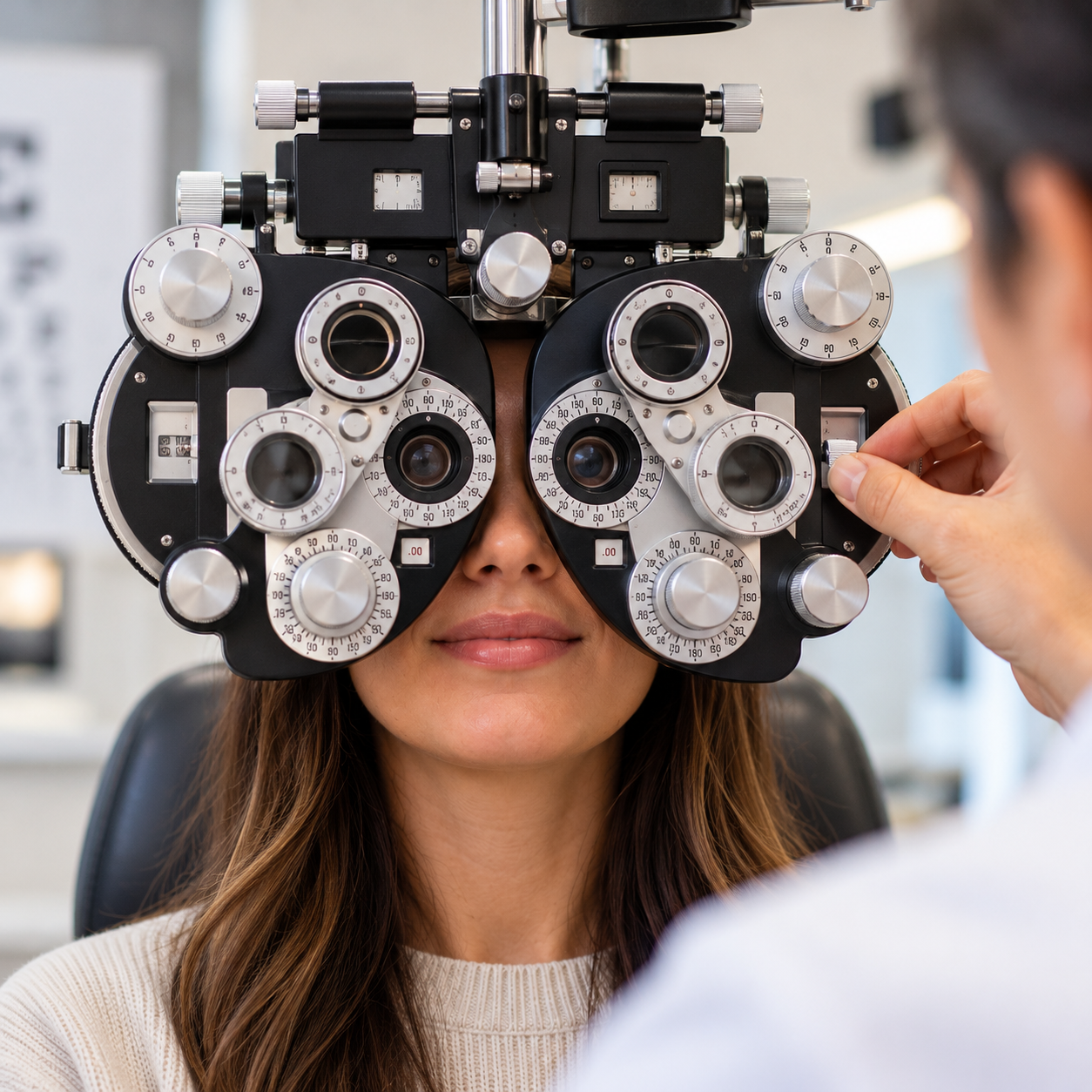
An Alberta Visual Referral Report is a form used when a driver needs additional professional vision testing to determine whether they meet the province's licensing standards.
The form documents important information, including your visual acuity, best-corrected vision, peripheral vision, and any relevant eye health concerns.
A licensed optometrist or ophthalmologist can complete the vision assessment and report the findings.
The optometrist doesn't issue or approve your driver's licence. Alberta's licensing authorities use the examination results to determine whether you meet the requirements or need further review.
If you've received a referral form from an Alberta registry, bring it to your appointment along with your current glasses or contact lenses.
You can also read our article about eye examinations and vision report forms in Edmonton.
Can I Drive in Alberta if I Only Have Vision in One Eye?
Yes, it's possible to hold a regular Class 5 driver's licence in Alberta if you have useful vision in only one eye.
Alberta's regular Class 5 standards assess visual acuity and visual field with both eyes open and examined together. There isn't a separate minimum acuity requirement for the worse eye in this licence class.
However, drivers must still meet the applicable vision standards.
People with vision in only one eye may experience reduced depth perception and peripheral awareness. Over time, many individuals adapt to these changes, but the circumstances of the vision loss matter.
If you've recently lost vision in one eye, additional assessment and time to adapt may be necessary before driving can safely resume.
An optometrist can assess your remaining vision and help determine whether further evaluation is required.
Can I Get a Class 5 Driver's Licence if My Vision Is Worse Than 20/50?
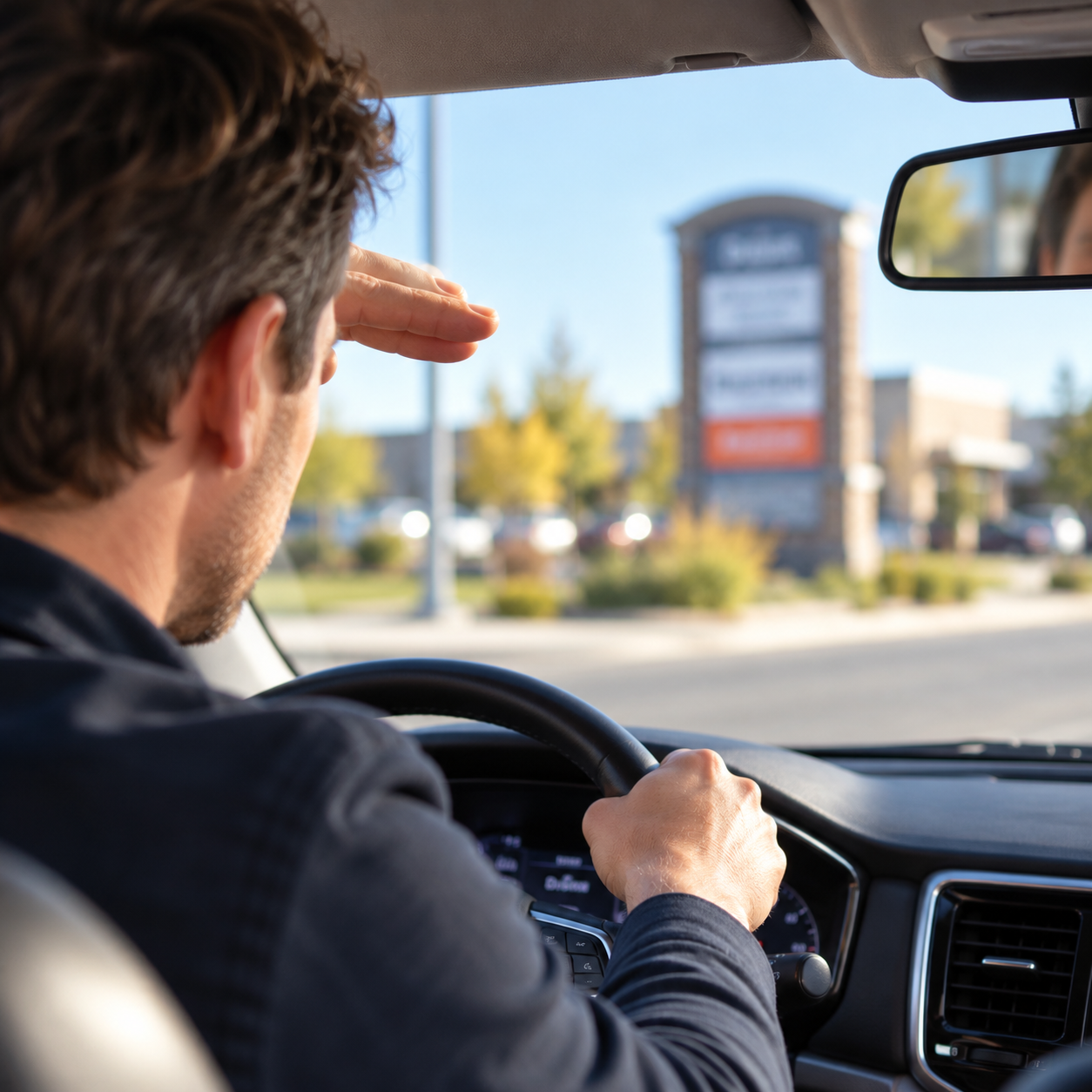
It depends on whether your vision can be improved with glasses or contact lenses.
Alberta's standard minimum visual acuity for a regular Class 5 driver's licence is 20/50 (6/15), with both eyes open and examined together.
If your uncorrected vision is worse than 20/50, but glasses or contact lenses improve it to the required level, you may still qualify.
If your best-corrected vision remains below 20/50, your situation becomes more complicated.
Alberta's Driver Medical Fitness program may review your circumstances individually and request additional testing. In exceptional circumstances, licensing decisions may consider how well someone has adapted to their visual impairment.
However, meeting an alternative assessment process does not guarantee that a licence will be issued or retained.
Our role as optometrists is to determine your best possible vision, investigate why it may be reduced, and provide accurate clinical information to support the review process.
Do I Need to Wear Glasses or Contact Lenses for My Driving Vision Test?
If you normally wear glasses or contact lenses for distance vision, bring them to your registry vision screening.
You do not need perfect vision without correction to qualify for a regular Class 5 licence.
If glasses or contact lenses allow you to meet the required standards, you may receive a corrective-lenses condition on your driver's licence.
If your licence requires corrective lenses, you must wear them whenever you drive.
If road signs are becoming harder to read, or your current glasses no longer provide comfortable distance vision, an updated prescription may make a meaningful difference.
Can I Remove the Corrective-Lenses Restriction From My Alberta Driver's Licence?
Possibly. If your vision has improved enough to meet Alberta's driving requirements without glasses or contact lenses, you may be eligible to have the restriction removed.
This sometimes happens after laser vision correction, cataract surgery, or other changes in vision.
You may need a new vision screening or documentation from an optometrist confirming your uncorrected visual acuity.
The restriction must be officially removed through the appropriate Alberta licensing process.
Until that happens, you must continue following the conditions printed on your driver's licence, even if you feel your vision has improved.
Does Alberta Test Peripheral Vision for a Class 5 Driver's Licence?
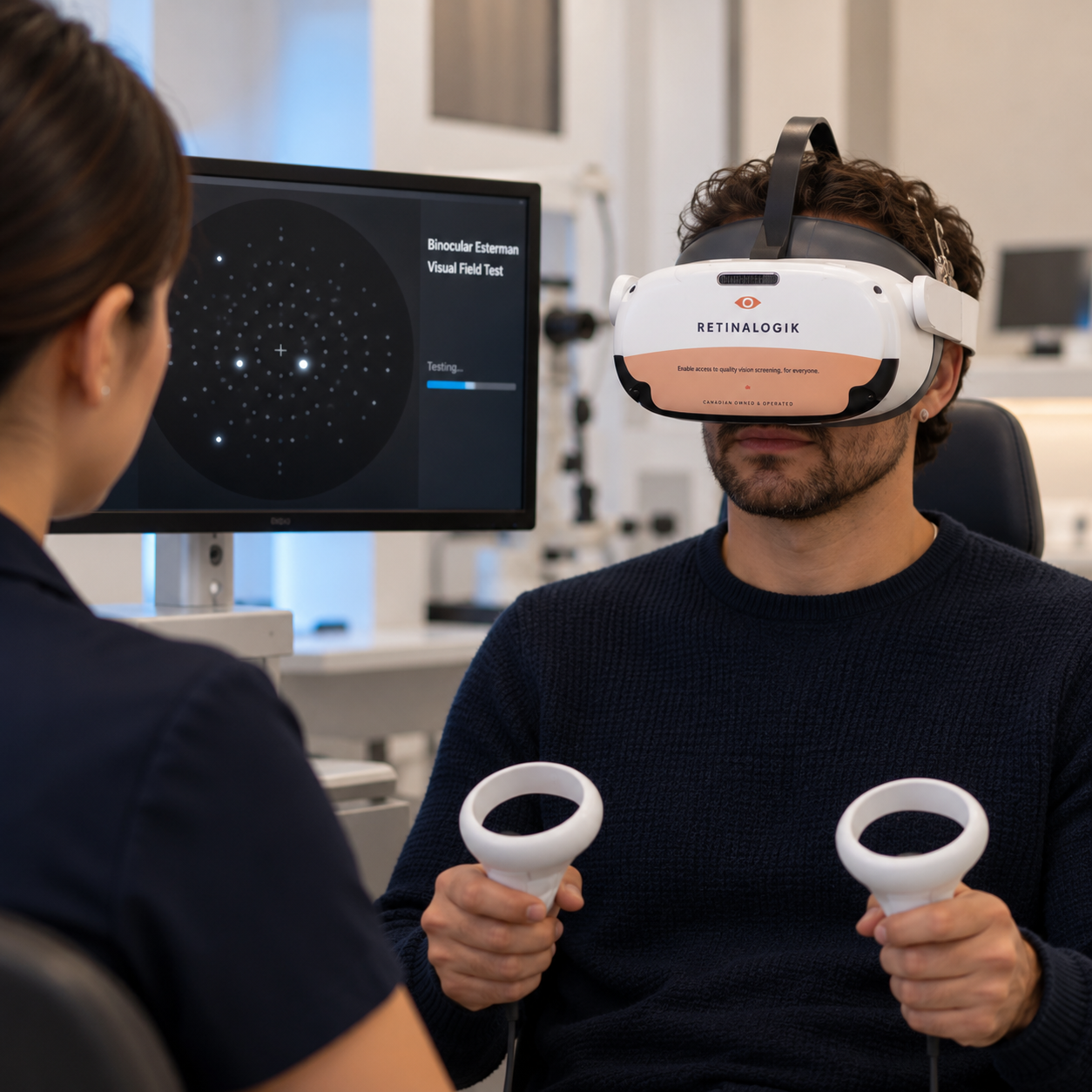
Yes. Peripheral vision is an important part of Alberta's driving vision standards.
For a regular Class 5 licence, the standard requires at least 120 degrees of continuous horizontal visual field, with at least 15 degrees above and below the horizontal line of sight.
Your peripheral vision helps you detect movement and hazards outside the area you're looking at directly.
This is particularly important when:
Checking intersections and approaching traffic.
Noticing pedestrians stepping toward the road.
Detecting cyclists or vehicles approaching from the side.
Maintaining awareness of surrounding traffic.
Conditions such as glaucoma, retinal disease, and certain neurological disorders can reduce peripheral vision without significantly affecting your central visual clarity.
When necessary, an optometrist can perform specialized visual field testing to measure your peripheral vision more precisely.
Can I Drive With Glaucoma, Cataracts or Macular Degeneration?
A diagnosis of glaucoma, cataracts, or macular degeneration doesn't automatically mean you must stop driving.
What matters is how the condition affects your visual function and whether you continue to meet Alberta's driving standards.
Cataracts can cause blurred vision, reduced contrast, and increased glare, particularly when driving at night.
Glaucoma can gradually reduce peripheral vision, sometimes without noticeable symptoms until significant damage has occurred.
Macular degeneration can affect the central vision needed to read road signs, recognize hazards, and identify details at a distance.
Some people with these conditions continue driving safely for many years. Others may require treatment, closer monitoring, additional testing, or changes to their driving privileges.
Regular comprehensive eye examinations help us monitor these conditions and assess their effects on your vision.
If you have a condition that may affect your ability to drive safely, it's important to discuss it with your optometrist and follow Alberta's medical reporting requirements.
Why a Registry Vision Screening Isn't a Comprehensive Eye Exam
Many people assume the vision screening machine at a registry office is equivalent to a comprehensive eye examination. In reality, they're designed for very different purposes.
A registry screening checks whether you appear to meet the minimum visual requirements for driving. It isn't intended to provide a complete assessment of your prescription, eye health, or risk of developing eye disease.
Passing a registry screening doesn't necessarily mean your eyes are healthy or that you're seeing as clearly as possible.
It's not uncommon for patients to tell us that their last "eye exam" was when they renewed their driver's licence.
Unfortunately, some eye conditions can develop gradually, without noticeable symptoms or immediate changes in central vision.
A proper comprehensive eye examination evaluates much more than your ability to read an eye chart.
At Helio Optometry, our comprehensive adult eye exams include Optomap ultra-widefield retinal imaging and OCT screening, helping us assess your eye health in greater detail.
Our goal isn't simply to help you meet the minimum driving standard. It's to help you enjoy the clearest, most comfortable vision possible while keeping your eyes healthy for years to come.
Where Can I Get an Alberta Driver's Licence Vision Assessment in Edmonton?
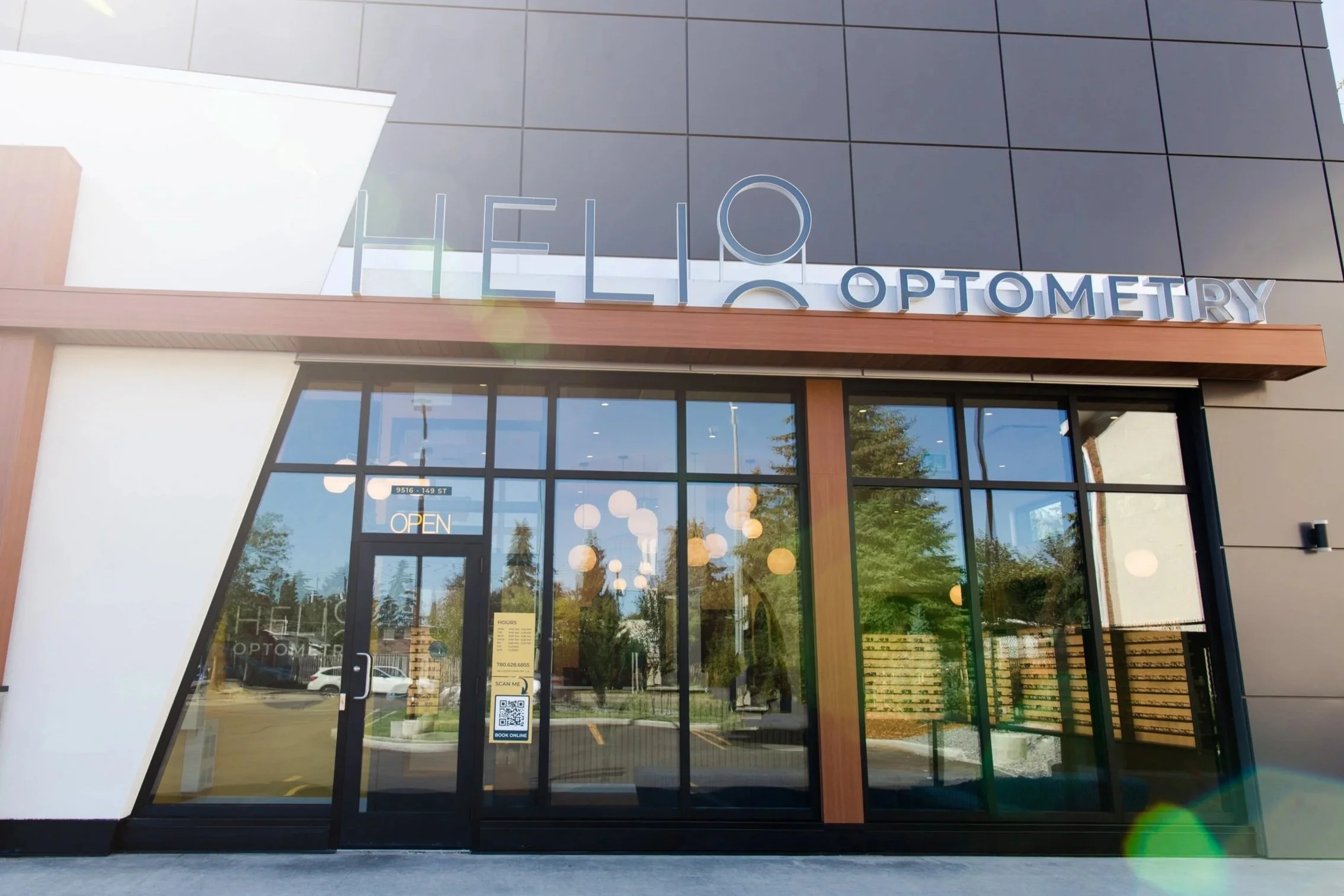
If you've failed a registry vision screening, need a new prescription, or have questions about your driving vision, Helio Optometry can help.
We're conveniently located at 9516 149 Street NW in West Edmonton, near Crestwood, Parkview, Jasper Gates and Laurier Heights.
Our optometrists can evaluate your visual acuity, determine your best-corrected vision, and assess your overall eye health. Additional testing, including visual field assessment, may be arranged when required.
If you've received a Visual Referral Report or other paperwork from Alberta Transportation, contact us before booking so we can confirm the appropriate appointment and testing requirements.
How Much Does a Driver's Licence Vision Assessment Cost?
The cost depends on the examination and documentation required.
At Helio Optometry, our comprehensive adult eye examination costs $134, including a vision assessment, Optomap retinal imaging, OCT screening, and an updated eyeglass prescription.
Specialized visual field testing, additional diagnostic assessments, or completion of specific driver licensing forms may involve separate fees. Alberta Health Care does not cover most expenses associated with driver's licence renewals, including vision assessments and related testing.
Our team can help explain the appropriate appointment and any applicable charges before your visit.
When Was Your Last Eye Exam?
Even if you meet Alberta's minimum driving vision requirements, your eyesight can change gradually, sometimes so subtly that you don't notice.
Regular comprehensive eye examinations help ensure your prescription remains accurate, your eyes are healthy, and you're seeing your best behind the wheel.
At Helio Optometry, we take the time to carefully assess your vision, explain our findings, and recommend solutions that work for your everyday life. Whether you need updated glasses, contact lenses, a driver's licence vision assessment, or simply peace of mind, we're here to help you drive with clarity and confidence.
Frequently Asked Questions, That People Don’t Always Ask.
-
No. Your optometrist cannot suspend or revoke your driver's licence. However, if we identify a vision problem that could make driving unsafe, we can report our findings to Alberta's Driver Medical Fitness program for review.
Our responsibility is to assess your vision, explain our findings, and help you understand your options. The final decision about whether someone is medically fit to drive rests with Alberta's licensing authorities, not your optometrist.
-
Do I actually have to wear my glasses when driving?
Yes! If your Alberta driver's licence requires corrective lenses (Condition Code A), you must wear your glasses or contact lenses whenever you drive. That means daytime, nighttime, sunny days, and cloudy days.
I often joke with my patients that if you need glasses to drive at night, you need them during the day, too! And yes, that means your sunglasses should also have your prescription if you're wearing them instead of your regular glasses.
Driving without your required corrective lenses isn't just a personal choice. It's a legal requirement and a responsibility to everyone sharing the road.
Think about it this way: How would you feel if someone caused an accident involving you or your family because they chose to drive knowing they couldn't see clearly?
Good vision matters every time you get behind the wheel, not just when it's dark. If you're unsure whether you still need glasses to drive, ask your optometrist to assess your vision before leaving them at home.
-
No. Vision assessments performed specifically for driver's licensing purposes are generally not covered by Alberta Health Care.
If your optometrist needs to perform additional testing, such as a binocular Esterman visual field test, or complete a driver's vision report, these services are typically paid for by the patient.
Some routine or medically necessary eye care may still qualify for Alberta Health Care coverage, depending on your age and medical circumstances. However, additional testing and documentation required specifically for licensing are generally out-of-pocket expenses.
A Question for Alberta Drivers
Do you think Alberta drivers should be required to have a comprehensive eye exam every five years to renew their driver's licence?
Would regular eye examinations make our roads safer, or should the current vision screening requirements remain the same?
We'd love to hear your thoughts. Leave a comment below!

Disclaimer: The content provided in this blog post by Helio Optometry eye care clinic in West Edmonton is intended solely for informational purposes and does not replace professional medical advice, diagnosis, or treatment by a Licensed Optometrist. No doctor/patient relationship is established through the use of this blog. The information and resources presented are not meant to endorse or recommend any particular medical treatment or guarantee and outcome. Readers must consult with their own healthcare provider regarding their health concerns. Helio Optometry and its optometrists do not assume any liability for the information contained herein nor for any errors or omissions. Use of the blog's content is at the user's own risk, and users are encouraged to make informed decisions about their health care based on consultations with qualified professionals.




Somewhere around your 40s, your eyes stop doing three things at once, and most people just live with it. Here's the fix most places never actually get right, and why Stonewire builds every lens around how you really live, not just what your prescription says.